Introducing: Hackers & Hustlers Jobs
We all know that hiring is hard. At Olark, we spent months trying to find the right people. For bigger companies this is a problem, but for a startup it’s a matter of life and death. So every startup I know is desperately looking for a better way to find their next hire.
If you’re in the YC network, you’ll attest to the immense value added by the YC jobs board on Hacker News. HN Jobs is so useful because it exposes your job opportunity to a lot of the right type of people. You’d probably get more eyeballs on a Monster.com listing, but those eyeballs probably don’t belong to talented hackers, designers, or startup business types.
So most non-YC startups rely on word of mouth and their social networks. I haven’t heard of any startup successfully using other job boards to find high-quality recruits. I have a theory as to why this might be the case.
When you launch any product, your goal is to find the people who need your product most. In the case of jobs boards, you typically find people who badly need a job. But those don’t tend to be the most talented individuals. So companies that post listings on the most popular jobs boards tend to get flooded with unimpressive resumes.
The reason why HN jobs works so well is that it’s hidden on a popular social news site where some of the world’s most talented hackers like to discuss startups and technology. They’re not there because they need a job, they’re there for intellectual stimulation, and if a great opportunity happens to bubble up, well, they might consider it.
The same thing is true on a vastly smaller scale for Hackers & Hustlers. Michigan’s most talented startup people hang out and talk shop every day on this Facebook group. It makes sense that you’d start to see a lot of people posting job opportunities as the community grew.
The problem is that job opportunities are not always the most interesting community discussion point. I don’t think people mind being gently notified that CompanyX is hiring, but they don’t want it to get in their way. That’s why Nate West and I created Hackers & Hustlers Jobs.
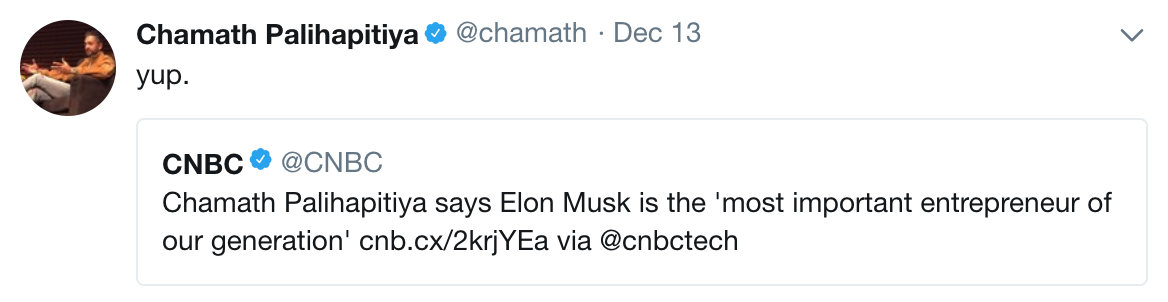
Our goal is to give startups in the Hackers & Hustlers network a cleaner way to expose more people to their job listing. Anytime someone posts a job listing, Nate and I will check it to make sure it’s legit, and then once we approve it a tweet will get sent out to everyone on our subscriber list that looks something like this:

We decided to go with twitter instead of email for notifications because it’s a nice low-hassle medium that gently notifies people of an opportunity and won’t annoy them. Not annoying our subscribers is actually the top variable we’re optimizing for. So we’ll rate-limit the jobs that go out to one every couple days.
If you’re reading this, you’re in our target market for subscribers, even if you’re not looking for a job. You’ll benefit from a flourishing Michigan startup community if you can connect your talented friends with people who are looking for jobs. Also, I think you’ll benefit from keeping a finger on the pulse of who’s hiring and what they’re looking for, as it gives you an early indicator of where that company is headed and what they’re worried about [1].
Nate and I are very anxious to see how our little experiment will turn out, and to hear your thoughts on the matter on the thread in H&H. We built the first version of this in a weekend [2], and we’re hoping maybe it will make a dent in the Michigan startup universe. Maybe a couple more startups will survive or thrive because they were able to find the right person. Maybe one of those startups will go on to become an anchor company for the region. Who knows?
What you can do to help:
1. Subscribe to twitter updates at http://hackersandhustlers.org
2. Look at the job postings and send them to any friend you think might be a match. I try and do this a couple times a week in my own life, as I think it’s immensely valuable to be a connector. What matters isn’t that you’ve made a match, it’s that you gave it a shot and made yourself more central to our community.
3. Blast out a link to http://hackersandhustlers.org through twitter and/or facebook. When just one person posts a link people usually ignore it, but if we all do it and people keep seeing it in their feed they can’t help but click.
___
[1] This type of awareness was what actually originally made me want to be a designer. I didn’t start out loving user interfaces, but I grew to love them after I noticed that no one is ever hiring a “general purpose idea guy”.
[2] For the technically curious, we built it using Sinatra and MongoDB, hosted on Heroku.
The crucible is for silver and the furnace for gold, and man is tested by the praise accorded himProverbs 27:21, and one of my favorite quotes ever.
The 3 Classes of Hacker-Designers
You hear an awful lot of praise for designers who code these days. But you don’t hear much about why it’s good for a designer to be able to code. In my mind, there are a few separate levels of hacker-designers. Each has it’s own unique benefits. So I thought it would be a good idea to separate out what I think are the three classes of hacker-designers:
1. Designers that can code HTML, CSS, and presentation-layer Javascript
These people can build better webpages than designers who only work in PSDs, because they understand the building blocks of the web. They understand interactions. Also, it’s not very hard to learn HTML and CSS and a little jQuery-flavored Javascript, so it’s a sign that they’re willing to dip their toes into code-land.
2. Designers that can prototype an app
If you can code a bit of ruby, use a simple framework like sinatra, understand the basics of SQL or at least an ORM like ActiveRecord, then you’ve just leveled up in your value. Now you can build functioning prototypes of apps that look and feel a lot like the real thing. They may not be scalable or secure, or fit well into any sort of existing codebase, but they are real working apps. You can put test users in front of it and see how they interact with it and really hone the experience before you invest engineering resources in scaling up the project.
3. Designers who can code production features
At Olark, a lot of times it’s incredibly valuable for Roland or I to be able to just jump into the codebase and fix a feature or build a new simple feature on our own. If you’re not comfortable with understanding how a large application works based on reading source code, then you’re not going to be able to do this. You also have to have a pretty good understanding of the frameworks and tools your startup is working with. But it’s definitely a huge plus.
…
My goal this year is to focus on #2. I want to be able to prototype mobile applications, and more advanced web-applications. That way, I can create this really nice feedback loop where I can think of an idea, talk to users, design an interface, talk to users, code a prototype, talk to users, and then scale it up if, after all this testing, it still seems valuable.
I believe this.
In the book I’m reading,The Talent Code, the author showcases a 1997 study which asked why some kids make massive performance progress when taking piano lessons and some do not.
After looking at a wide range of variables- IQ, aural sensitivity, math skills, rhythm, sensorimotor skills, income level- the researchers stumbled on an answer in a question they’d asked the children before they ever slid their stool to the keyboard.
The question? How long do you think you’ll play your new instrument?
As you can see in the graph above, the correlation between long-term commitment and pace of improvement were eye opening. From the book:
I couldn’t believe my eyes. Progress was not determined by any measurable aptitude or trait, but by a tiny powerful idea the child had before even starting lessons. The differences were staggering. With the same amount of practice the long-term-commitment group outperformed the short-term-commitment group by 400%. The long-term-commitment group with, with a mere 20 minutes of weekly practice, progressed faster than the short-termers who practiced for an hour and a half. When long-term-commitment combined with high levels of practice, skills skyrocketed.
As in piano, entrepreneurship sees its fair share of tourists. Toe dippers, looking for a thrill, occasionally take the plunge yet continue keeping an eye on that safe and inviting shoreline. Inevitably, they all swim back via quick flips, acqihires or giving up once they figure out that being a founder isn’t nearly as cool as they thought it would be.
And I don’t blame them. This startups stuff is hard on every level.
But there are a group of founders with a long-term commitment to practicing the skill of turning small companies into impactful businesses. And they made the decision, before they ever started or joined a company, that the path of entrepreneurship was for them.
This doesn’t mean they’ll never give up on their current idea. Nor, does it mean they won’t work within a large company. It means that the decisions they make and the experiences they accumulate will be feeding that long-term commitment to honing their craft as entrepreneurs.
PS- you can read the whole chapter this graph comes from here.
It’s what comes next that is so much more interesting - the point between taking that idea for a new application or service and actually expressing it in a real form. Building it. Prototyping it. That’s when your ideas are subject to limits (technical, execution, market, financial) and those limits actually test your theses and tenets. Prototyping shows you where your assumptions were wrong, maybe, and how your idea may be even better than you thought. Most importantly, it subjects your idea to numerous unanticipated constraints.
Andy Weissman
Between Thought and Expression Lies A Lifetime
(via fred-wilson)
(via fred-wilson)
An Analogy To Explain Why Ideas Are Worthless
Ideas for web/mobile apps are like ideas for paintings.
I could pitch the idea of painting a woman with a half smile and no one would care. At best they’d be interested to see how it turned out. But no one would decide whether or not the painting was good or bad before it was actually done.
The hard part about building a good app lies in the brush work, the emotion, the proportions, the composition - the execution. Not the idea.
Hackers & Hustlers: 1 Year Later
About a year and a half ago I got invited to an event in Ann Arbor called the “A2 New Tech Meetup”, and I was really nervous. I drove from MSU to Ann Arbor by myself, walked into a room full of smart, unfamiliar faces, and sat down in the front row next to a guy who introduced himself as Jeff Epstein. He was there to pitch his startup, Zferral. The lights dimmed and a guy with a braided ponytail came out, explaining that we were going to watch 5 startups pitch and it was our job to ask really good questions.
By the end of the night I’d met some great people, heard some great ideas, and knew that I loved the authentic startup culture in that room. I drove back to East Lansing obsessed with the idea of starting a similar meetup at MSU, so we could grow our own startup culture. I wanted to call it Hackers & Hustlers.
I started talking to people about the idea and heard that Betsy Weber and Blake Nyquist from TechSmith and Nick Kwiatkowski from MSU were also interested in starting a similar meetup. So we joined forces and put on a few events that spring.
Before the first one, I was so nervous I almost puked. All my friends were going to be there, and I had managed to convince some really cool people to come talk about their startups. One of them was Zach Steindler, a cofounder at Olark. We ended up talking afterward and, well, one thing led to another :)

(He hired me)
I decided it might be useful to start a Facebook group for the meetup, so we could announce new events and post interesting links. I invited a couple people, and right away there was just an energy there. People started posting and things picked up steam rather quickly.
And then we just kept talking. New people started finding out about the group and joining the conversation. It’s grown from 0 to nearly 500 people in just over a year. But the quantity of people isn’t what matters - it’s the quality. I am incredibly thankful that the best hackers and hustlers in Michigan come to talk in an open forum every day. I love hearing what they have to say. We’re creating a ruckus, making things happen, and moving things forward.
One of the reasons Hackers & Hustlers has exceeded all of our expectations is that no one owns it. That’s what a community is all about. We’re just here to help each other, to encourage each other even if we’re nervous and unsure of ourselves. If it weren’t for the people that helped me, like the folks at the A2 New Tech meetup, Hackers & Hustlers would have never existed.
I think Henry summed it up best:
William Shockley: The Steve Jobs Counter-Example
We all subconsciously emulate our heroes, even if we can’t draw any logical connection between their behaviors and their outcomes. After reading Steve Jobs’s biography, I think a lot of us are wondering whether his maniacal management style had anything to do with his success. Some might even experiment with developing our own reality distortion fields.
I think in these situations what is most useful is a good counter-example. William Shockley fits the bill perfectly. He was a scientific genius, and a masterful recruiter. He won the Nobel prize for inventing the transistor, then came to Palo Alto to start a startup to commercialize the transistor. He was sitting on top of a goldmine, the very birth of the nacent computer industry. But it wasn’t his company that ended up taking advantage of the opportunity. Not for lack of ideas - no he employed the very people that would go on to start Intel. Why did Shockley Semiconductor fail while Intel succeeded?
Because Shockley was a horrible manager, and all his employees quit and decided to start their own companies. Watch this 15 minute documentary to learn the details:
http://www.youtube.com/watch?v=yLNh4UY5ohw
So there you have it, folks. Your counter example to the Steve Jobs school of management.
The Evolution of the U.S. Automobile Industry and Detroit as its Capital
Anyone who’s interested in how industries emerge and evolve (cough, tech startups, cough) should give this a read.
In its first fifteen years the U.S. automobile industry was characterized by a great deal of entry and the number of firms exceeded 200. Despite robust growth in the market for automobiles, the industry subsequently sustained a prolonged shakeout in the number of producers and evolved to be an oligopoly dominated by three firms